Welcome to one of Africa’s most spectacular landscapes. At Simien Ethio Tours, we are proud to guide you through the breathtaking beauty and unique ecosystems of the Simien Mountains National Park, a UNESCO World Heritage Site.
Location & Size
The Simien Mountains National Park (SMNP) is a crown jewel of Ethiopia, located in the North Gonder Zone of the Amhara region. Situated approximately 870km northwest of Addis Ababa, this majestic mountain massif is part of the Ethiopian highland plateau.
The park spans five districts (woredas): Debark, Adi Arkay, Beyeda, Janamora, and Tselmi, and borders 38 local kebeles (farmers’ associations).
A Park That Grew to Protect
The park’s history reflects a deep commitment to conservation:
· Established in 1969, the park originally covered an area of 136 km².
· A major re-demarcation in 2003 saw the park boundary adjusted to exclude villages and cultivated land, while incorporating the Mesarerya and Lemalimo Wildlife Reserves.
· A further extension in 2007 was a significant milestone, adding the iconic peaks of Silki, Kidus Yared, and Ras Dejen—the highest point in Ethiopia at 4,533 meters.
Today, the Simien Mountains National Park encompasses a protected area of 412 km², with elevations ranging from 1,900 meters to the summit of Ras Dejen.
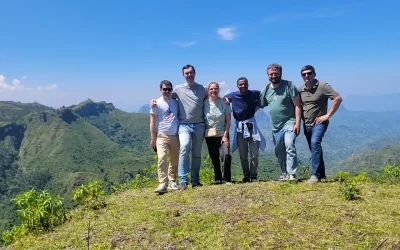
The park’s expansion means more protected landscapes, wildlife habitats, and trekking routes for you to explore. From the dramatic escarpments and deep valleys to the high-altitude plateaus, the park offers an unparalleled adventure.
Flora of the Simien Mountains – Simien Ethio Tours
Giant Lobelia: The Sentinel of the Highlands
Scientific Name: Lobelia rhynchopetalum
Local Name: Jibra (Amharic)
The Giant Lobelia is one of the most iconic and otherworldly plants you’ll encounter on your trek through the Simien Mountains. These magnificent plants stand as silent sentinels across the Afroalpine landscape, perfectly adapted to survive in the extreme high-altitude environment.
Unique Adaptations to High Altitude
Temperature Regulation:
· Young leaves point vertically to protect against strong sunlight
· Mature leaves become horizontal once filled with protective biochemicals
· Can withstand temperatures as low as -6°C
Growth Strategy
· Grows 2-3 meters tall (up to 7 meters when flowering)
· Thick cork layers on stems provide insulation against freezing
· Old leaves fold down to protect the stem and retain water
Night Protection
· Young plants form a “night bud” by tightly closing their leaves around the central bud
· Circular rosette shape acts as a reflector to warm the growing tip
Spectacular Flowering Cycle
“Mast Year” Phenomenon:
· Every few years, the lobelias have a mass flowering event
· Produces a single cluster of dark blue-purple flowers
· One inflorescence can produce up to 2 million seeds
· Plants die after flowering, leaving skeletal remains for years
Other Remarkable Flora of the Simien Mountains
Erica Arborea (Tree Heath)
Features:
· Forms dense forests at lower mountain elevations
· Can grow up to 6 meters tall
· Small white flowers create spectacular displays
· Important habitat for birds and small mammals
Helichrysum Species (Everlasting Flowers)
Characteristics:
· Silver-leaved shrubs covering high-altitude slopes
· Flowers retain color and shape when dried
· Several species endemic to the Ethiopian highlands
· Known locally for medicinal properties
Afroalpine Grasslands
Composition:
· Dominated by tussock grasses and sedges
· Home to numerous endemic herb species
· Critical grazing area for wildlife
· Creates the characteristic “moors” landscape
Plant Spotting Guide
Best Locations:
· Giant Lobelia: Above 3,000m, particularly near Gich and Chenek
· Erica Forests: Sankaber to Gich route
· Alpine Meadows: Imet Gogo and Inatye viewpoints
· Helichrysum Fields: High plateaus throughout the park
Seasonal Highlights:
· Flowering Lobelias: Variable (dependent on mast years)
· Erica Blooms: August to October
· Alpine Wildflowers: July to September
· Grassland Colors: Year-round, most vibrant after rains
Photography Tips for Flora
1. Giant Lobelia: Best photographed in morning or late afternoon light
2. Macro Opportunities: Numerous small alpine flowers perfect for close-ups
3. Landscape Context: Include plants to show scale of the mountains
4. Seasonal Changes: Document the same locations to show seasonal variations
Conservation & Ethical Guidelines
Our Responsible Approach:
· Stay on Trails: Prevent damage to fragile root systems
· No Picking: All plants are protected within the national park
· Respect Growth: Avoid touching or damaging the lobelia’s protective leaves
· Educational Focus: Learn about plants without disturbing them
Climate Change Impact:
Our guides will explain how these unique plants are adapting to changing conditions and the importance of preserving their fragile habitat.
What to Look For
· Lobelia Adaptations: Notice how leaves change with age and altitude
· Microclimates: Observe how plant communities change with elevation
· Pollinators: Watch for sunbirds and insects visiting flowers
· Seasonal Changes: Document the amazing adaptations to dry and wet seasons
Why Visit with Simien Ethio Tours?
Our tours are designed to immerse you in this unique environment responsibly, showcasing the park’s grandeur while supporting its preservation for generations to come.
Join Simien Ethio Tours to discover these botanical wonders with guides who understand and respect the delicate balance of this unique ecosystem. Your journey through the Simien Mountains will reveal not just stunning landscapes, but an entire world of specialized plants surviving against the odds.
Let Simien Ethio Tours be your guide to this incredible natural wonder.