Fasil Ghebbi: The Royal Enclosure
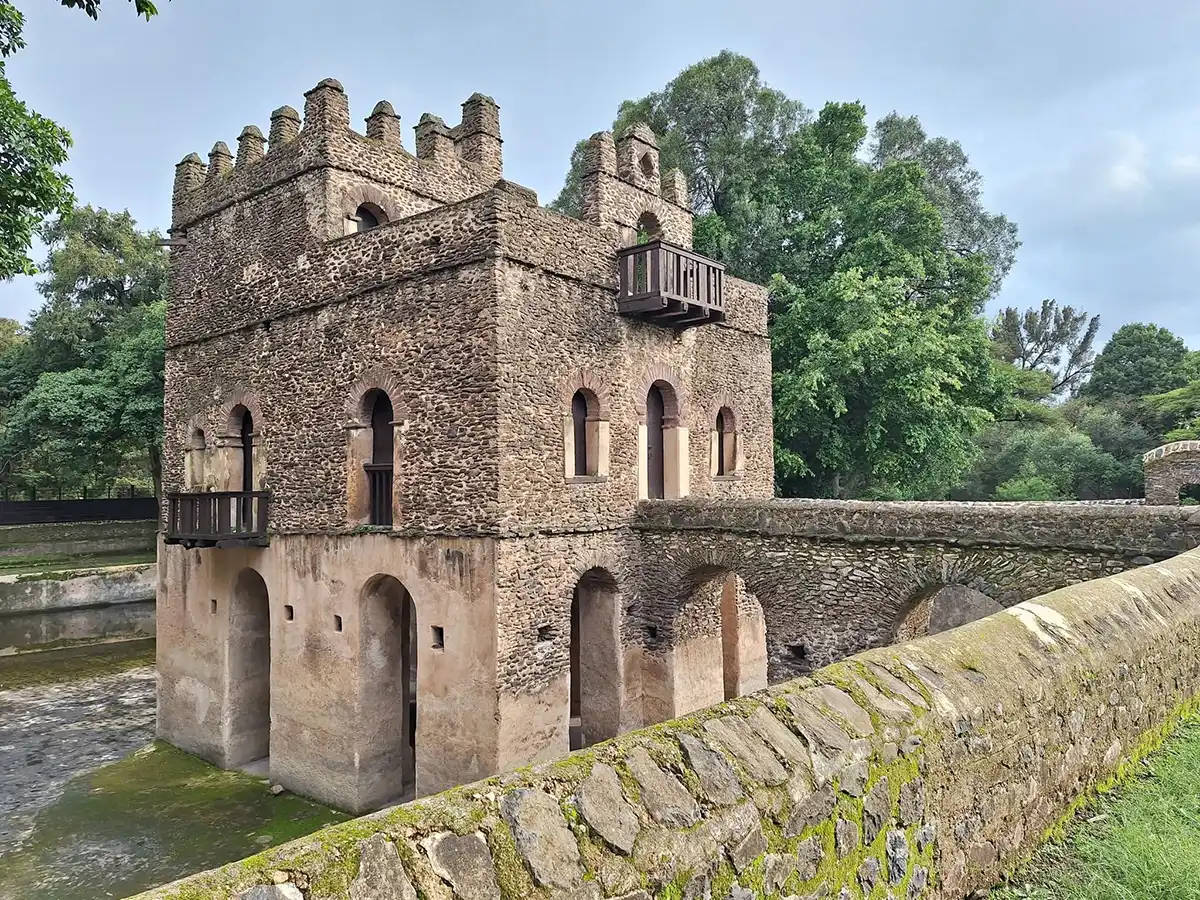
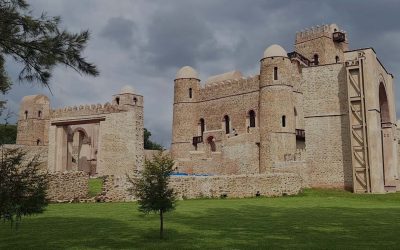
The centerpiece of any Gondar visit is Fasil Ghebbi, a walled compound of six fortified stone castles built from the 1630s onward by successive emperors. The largest and oldest, Emperor Fasilidas’ three-story castle, rises 32 meters and blends Portuguese, Indian and Aksumite architectural influences into something found nowhere else in Ethiopia — locally, it’s often called the “Camelot of Africa” for exactly that reason.
Walking the compound with a guide matters here: unmarked details — a library, a banqueting hall, the ruins of Empress Mentewab’s palace — are easy to miss without someone who can place each building in the right reign and story.
Debre Berhan Selassie Church
A short drive from the castles, Debre Berhan Selassie is Gondar’s other essential stop. Consecrated in 1693, it’s famous for a ceiling covered in eighty painted cherubic faces, along with wall murals depicting the Trinity, the life of Christ, and Ethiopian saints including St. George. It’s also the only major Gondarine church to survive an 1888 Mahdist raid unscathed — local legend credits a swarm of bees that drove the attackers back at the gate.
Fasilides’ Bath
Just outside the Royal Enclosure sits a sunken stone pool complex built under Emperor Fasilidas. For most of the year it’s a quiet, atmospheric ruin — but every January it becomes the center of Timkat, the Ethiopian Orthodox Epiphany celebration, when the pool is filled and thousands gather for immersion and procession. If your dates line up with mid-January, it’s worth planning around.
Beyond the Core Sites
- Kuskuam complex — hilltop ruins associated with Empress Mentewab, on the edge of the city, with sweeping views over Gondar
- Ras Gimb Palace — a former palace now holding a small museum on regional history
- Felasha Village — heritage site connected to Gondar’s Beta Israel (Ethiopian Jewish) community and crafts
Best Time to Visit
October through March, the dry season, gives the clearest skies and most comfortable walking around the castles. It also brackets Timkat in January, Gondar’s single biggest event. The June–September rains can make sightseeing wetter and any onward Simien Mountains plans messier, so we generally build Gondar tours into the same dry-season window as our treks.
How we handle it: Our Gondar tours run as a half-day or full-day add-on to any Simien Mountains booking — licensed local guide, entry fees and transport arranged, timed either before your trek or on the way back to rest before your flight.
Gondar as Your Northern Ethiopia Base
Beyond its own history, Gondar is the practical hub for the region: roughly 2.5 hours by road from Debark and the Simien Mountains National Park entrance, and a short trip from Lake Tana’s island monasteries. If you’re combining a castle tour with a trek, we typically recommend seeing Gondar first — it’s a good way to acclimatize to the altitude and pace before heading into the escarpment.
Add a Gondar City Tour to Your Trip
Tell us your Simien or Danakil dates and we’ll build a Gondar half-day or full-day tour around them.